Crawl-In Duct Cleaning in Metro Vancouver
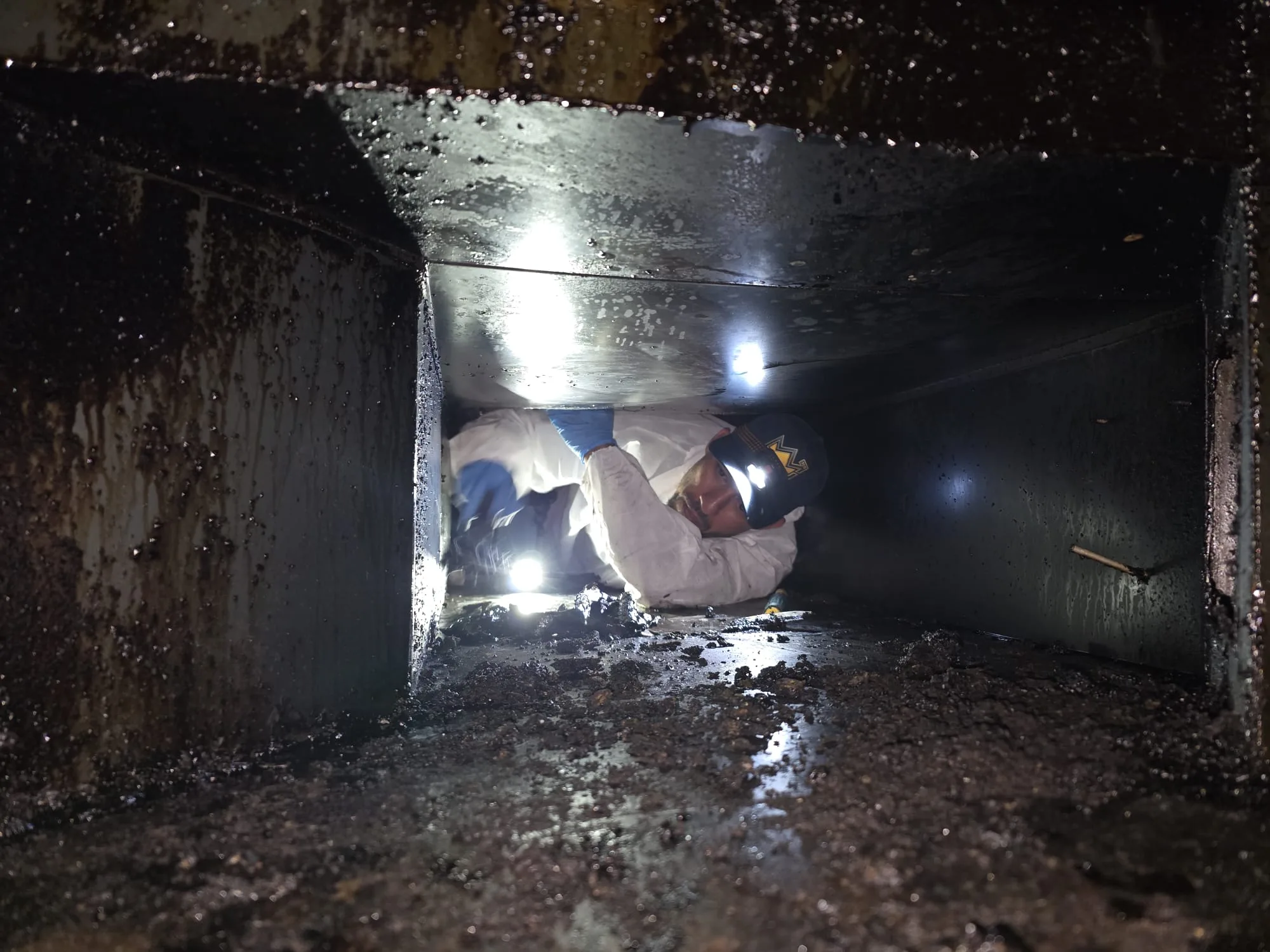
Standard spray wands leave grease behind in long horizontal duct runs. Our confined-space crews physically enter the ductwork to scrape and power-wash every surface to bare metal.
- Emergency servicesAvailable 24/7
- Office hoursMonday – Friday 7 to 5
Why Standard Cleaning Falls Short in Horizontal Duct Systems
Many multi-storey buildings, shopping centres, and hotel complexes route kitchen exhaust horizontally through false ceilings and service shafts before reaching a roof riser or exterior wall. These runs can extend dozens or even hundreds of feet. Airflow velocity drops significantly in horizontal sections, causing grease vapours to condense and pool along the bottom of the duct and inside structural elbows. Standard spray wands physically cannot reach deep enough into these long sections to remove accumulated grease. The result is hidden fuel loads that build silently in low-velocity zones, creating fire hazards that remain invisible during routine hood-level cleaning. Assuming a standard service covers the full system is the single most common oversight facility managers make with complex duct layouts. Total Commercial Exhaust crews address this gap through certified physical entry, reaching every surface that external equipment cannot.
How Our Crawl-In Duct Cleaning Process Works
Each crawl-in service follows a structured sequence designed to eliminate blind spots and restore airtight integrity to every access point in the system.
- 01
System assessment and access mapping
Technicians survey the full duct layout, identify all horizontal runs, elbows, and low-velocity zones, and map every existing access door location.
- 02
Access door opening and frame inspection
Each access panel is opened, and the frame is inspected for damage, corrosion, or failed gaskets before cleaning begins.
- 03
Confined-space entry with safety protocols
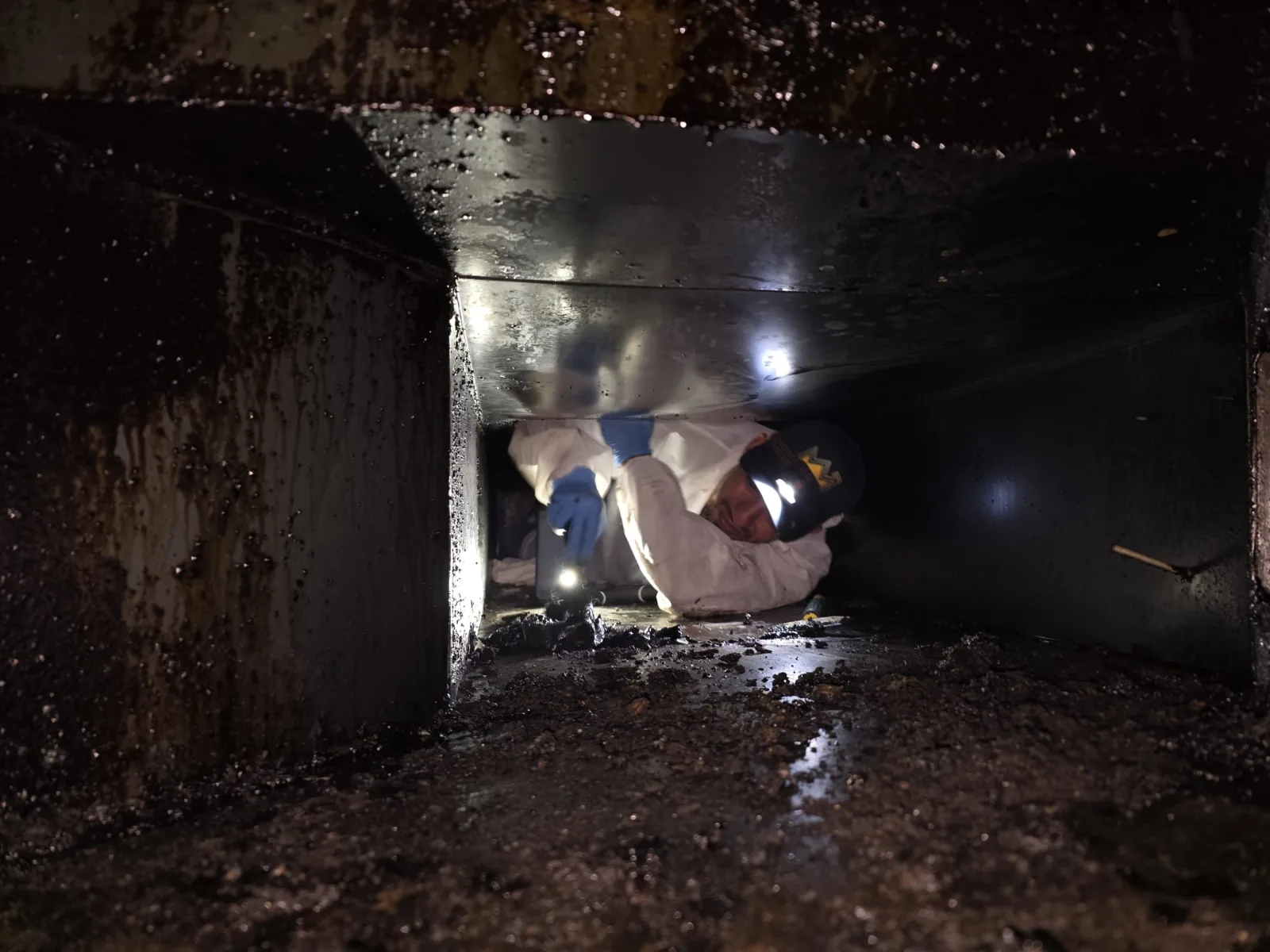
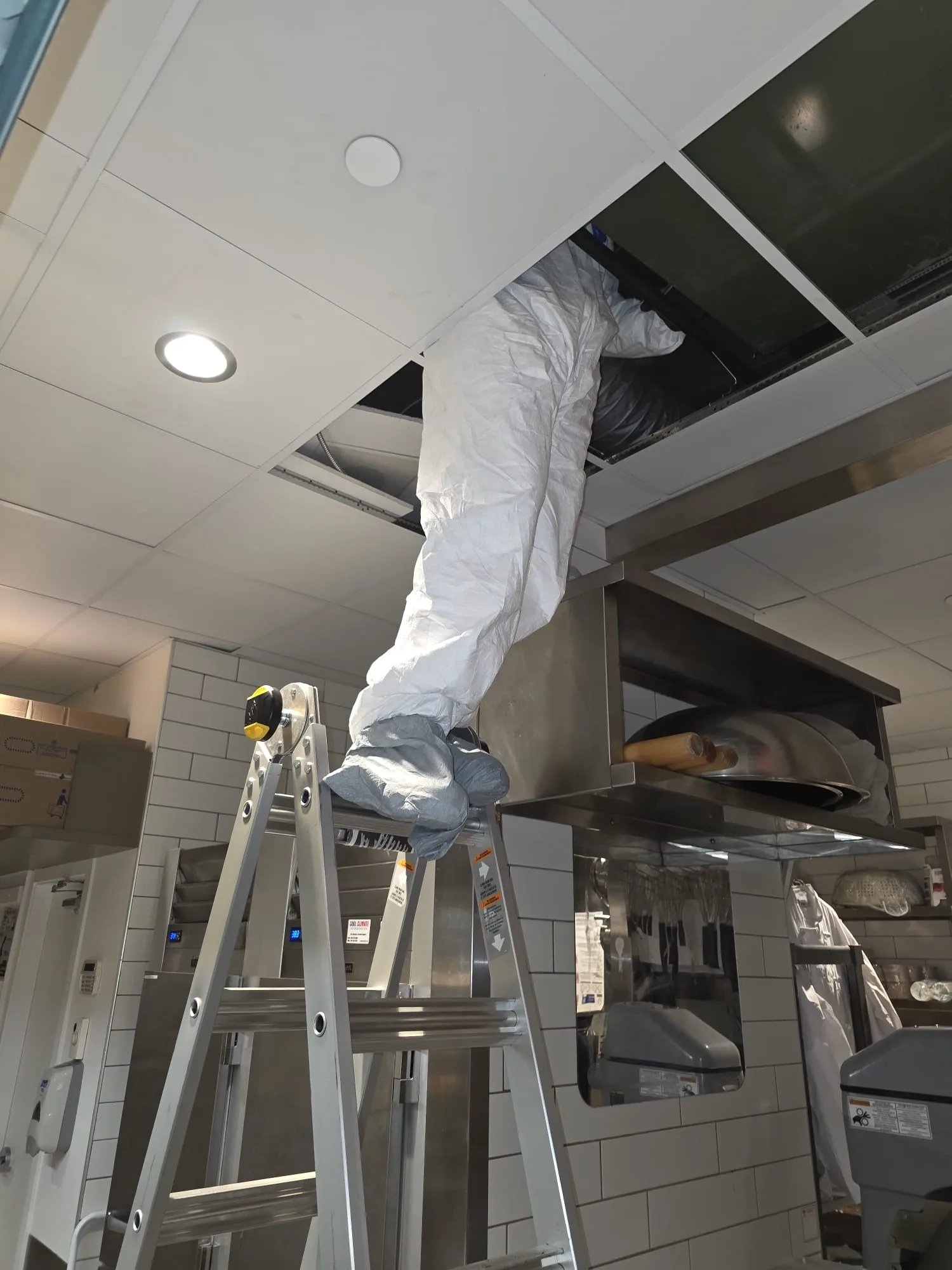
Technicians equipped with confined-space safety gear physically enter the ductwork to reach sections that external spray equipment cannot access.
- 04
Manual scraping and power washing to bare metal
Interior duct surfaces, seams, and elbows are scraped and power-washed to remove condensed grease deposits down to the bare metal substrate.
- 05
UL-listed access door resealing
Every access door opened during the service is cleaned, inspected, and reinstalled with UL-listed, fire-rated gaskets to restore a grease-tight, airtight seal.
What Crawl-In Duct Cleaning Covers
Physical manual entry for long horizontal runs
Long horizontal duct paths running between building floors, through false ceilings, or across complex commercial layouts cannot be cleaned thoroughly with standard spray wands alone. Our crews physically crawl interior duct networks to scrape and power-wash hard-to-reach horizontal runs, structural elbows, and low-velocity zones where grease vapours condense and settle. This eliminates hidden grease pockets that represent the highest fire risk in complex exhaust systems. Every section is cleaned to bare metal, leaving zero blind spots in the system.
Confined-space safety and crew certification
Crawl-in duct cleaning demands more than cleaning expertise. Technicians work in enclosed spaces with limited ventilation and restricted movement. Our crews follow confined-space safety protocols, using appropriate safety gear for physical entry into duct networks. This capability separates dedicated commercial exhaust cleaning from general duct or HVAC services, which typically lack the training and equipment for manual entry into kitchen exhaust systems. The process is documented with enterprise digital reporting, including comprehensive before-and-after photo audits of every section accessed.
UL-listed access door inspection and resealing
Every access door opened during crawl-in cleaning is more than a point of entry. It is a fire-rated barrier that must maintain an airtight, grease-tight seal after service. Total Commercial Exhaust inspects every existing duct opening, cleans the frame, and reinstalls UL-listed, fire-rated gaskets to prevent exhaust leaks. Compromised access doors allow grease-laden air to escape into building cavities, creating fire spread pathways that defeat the purpose of the cleaning itself. Proper resealing is what completes the service.
Is Crawl-In Duct Cleaning Right for Your Facility
Not every exhaust system requires crawl-in cleaning. Here’s how to determine whether your facility needs manual-entry service.
Duct run length
Horizontal runs exceeding standard spray-wand reach, particularly those travelling through false ceilings or between floors, accumulate grease in sections that external equipment cannot address.
Building complexity
Multi-storey buildings, shopping centres, and hotel complexes with ductwork routed through service shafts or structural cavities are primary candidates.
Inspection history
Facilities that have received citations or warnings about grease accumulation in ductwork sections beyond the hood and fan should consider crawl-in service.
Cooking volume and fuel type
High-volume operations producing heavy grease loads, particularly solid-fuel and charbroiling kitchens, generate faster buildup in horizontal low-velocity zones.
A good fit when
- Your exhaust system includes long horizontal duct runs that travel through false ceilings, between floors, or through service shafts before reaching a roof riser or exterior wall.
- Previous cleaning services have been unable to access or adequately clean interior duct sections beyond the hood and rooftop fan.
- Your facility is a multi-storey building, hotel complex, or shopping centre with complex duct routing that prevents straight vertical venting.
Probably not needed when
- Your kitchen exhaust system vents straight up through the roof with short, accessible vertical duct runs. Regular NFPA 96 Exhaust Cleaning is likely sufficient.
- Your ductwork is too narrow or structurally unsuitable for safe physical entry. In these cases, alternative deep-cleaning methods may be recommended after an on-site assessment.
If your facility has horizontal duct runs that standard cleaning cannot fully reach, crawl-in service is the only way to eliminate hidden grease loads and achieve complete bare-metal degreasing. Contact Total Commercial Exhaust for an on-site assessment to determine the right approach for your system.
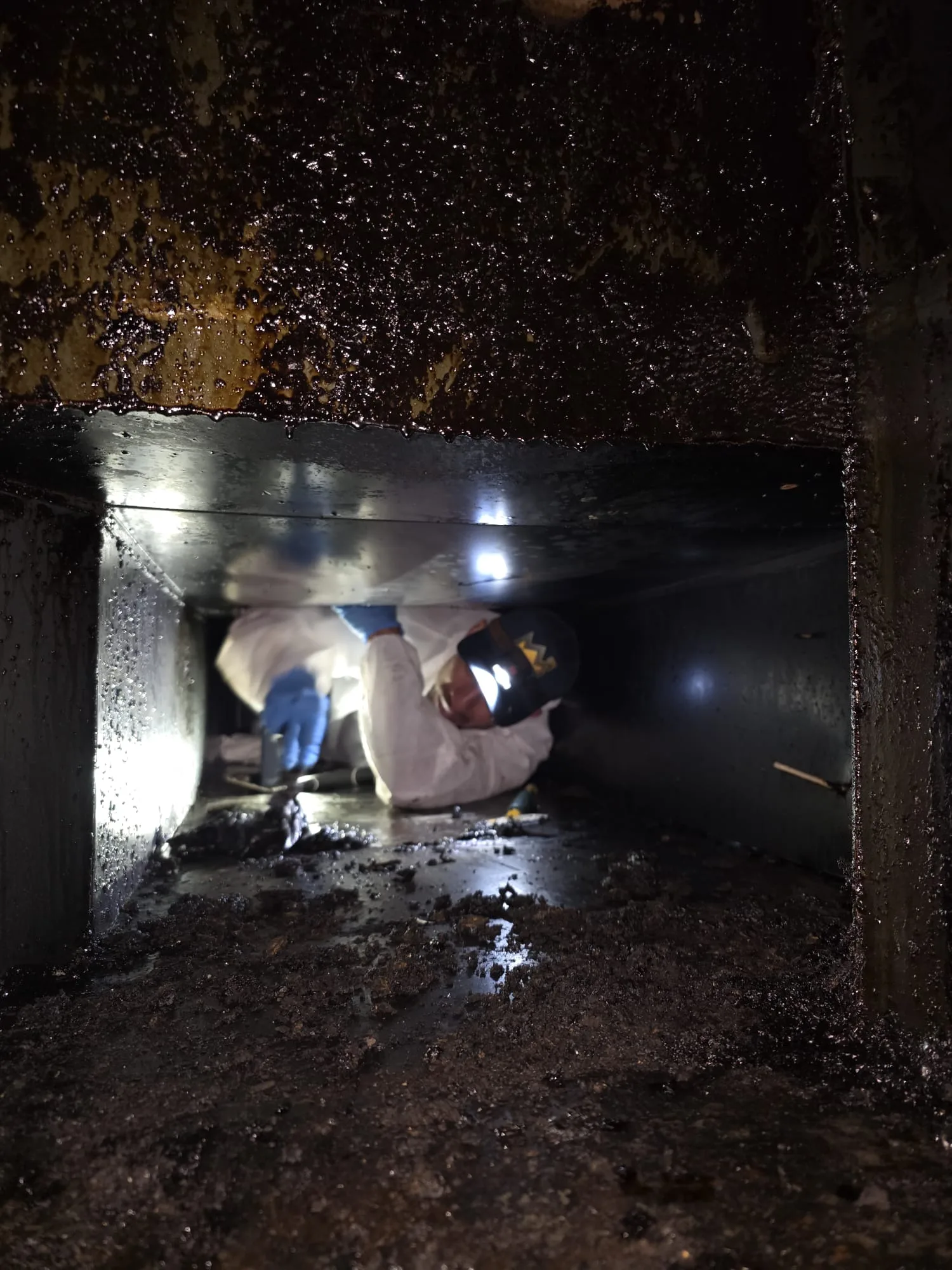
Crawl-in cleaning on real TCS jobs
Industries We Serve
Total Commercial Exhaust works wherever there is a commercial kitchen, from restaurants and food trucks to hospitals, arenas and processing plants.
 Source: TC Solutions siteRestaurants & Fine Dining
 Source: TC Solutions siteFood Courts & Food Trucks
 Source: TC Solutions siteBars, Pubs & Breweries
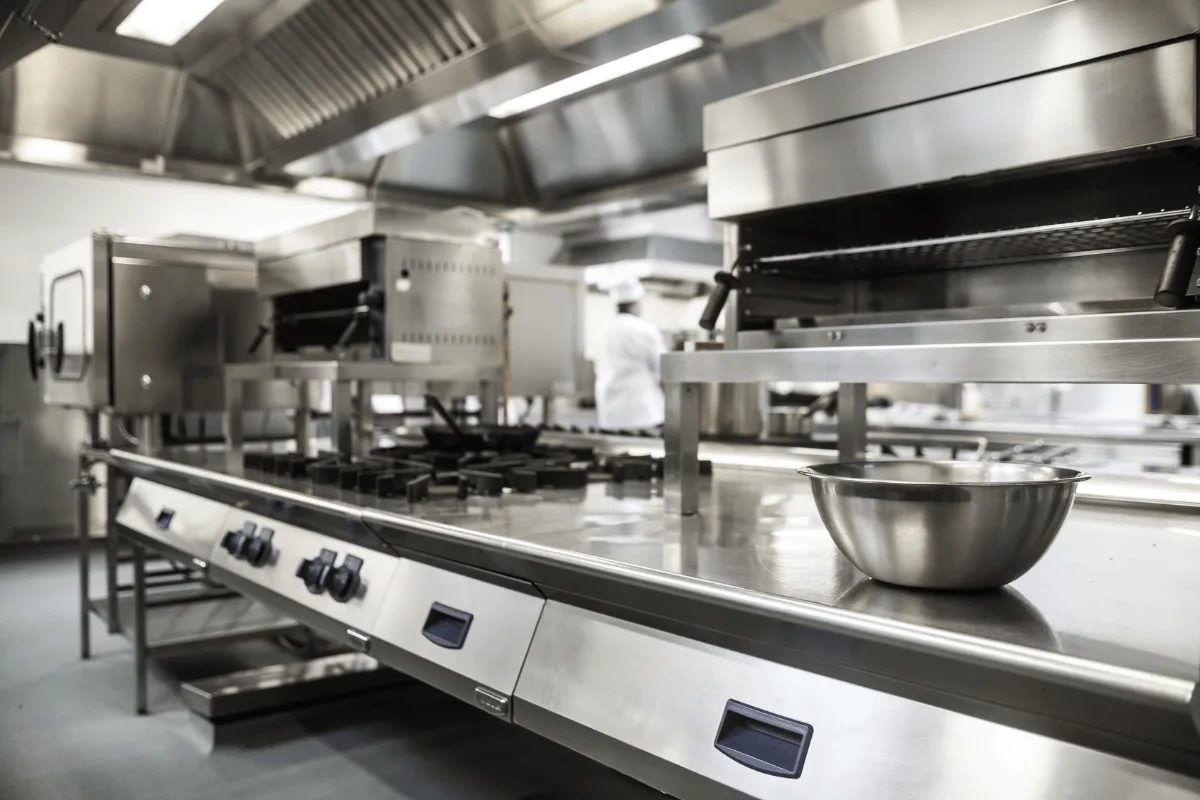 Source: TC Solutions siteHotels & Convention Centres
- Stock slot · Sports & Entertainment ArenasSports & Entertainment Arenas
- Stock slot · Golf & Sports ClubsGolf & Sports Clubs
- Stock slot · Community & Civic FacilitiesCommunity & Civic Facilities
- Stock slot · Religious Institutions & ChurchesReligious Institutions & Churches
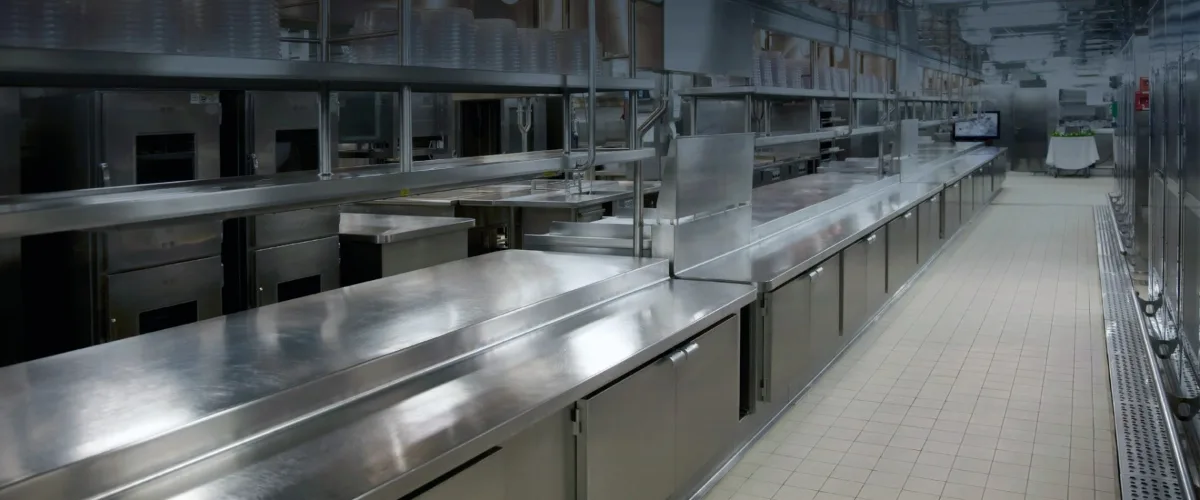 Source: TC Solutions siteHospitals, Healthcare & Senior Living
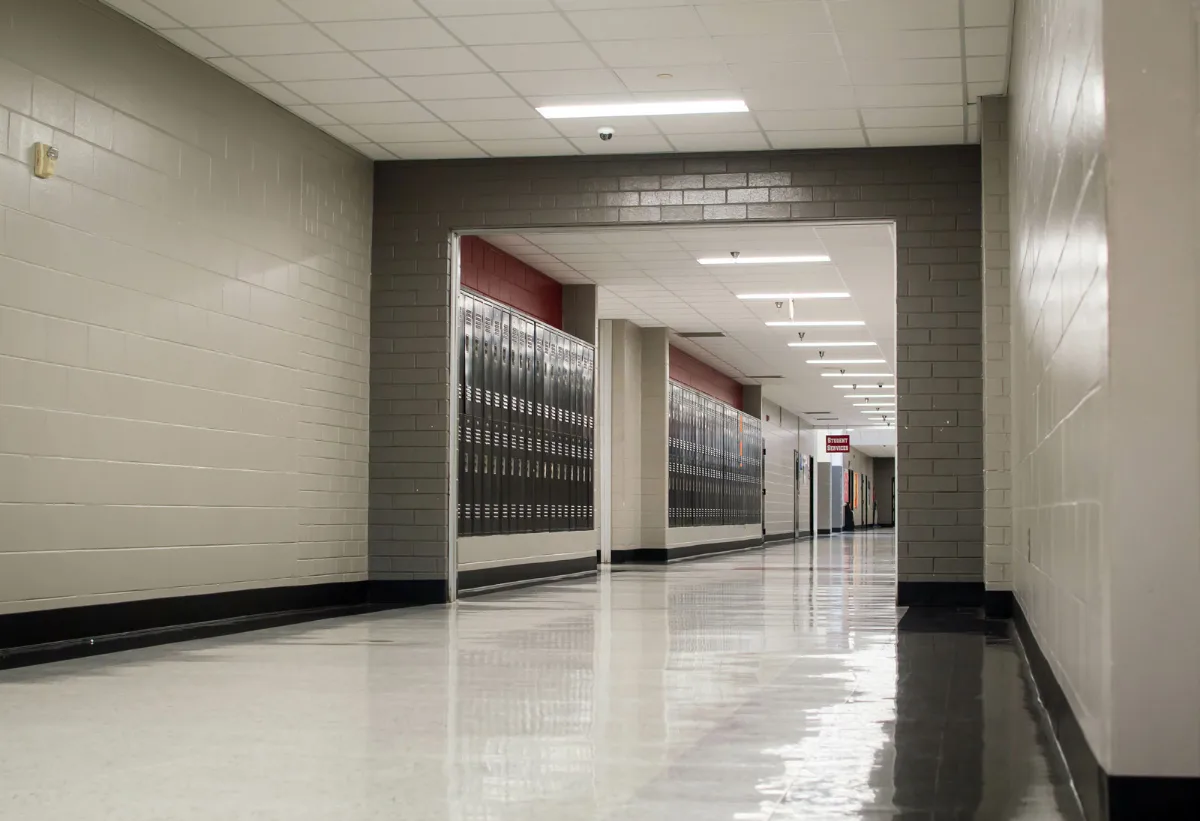 Source: TC Solutions siteSchools & Educational Facilities
 Source: TC Solutions siteProperty Management & Commercial Facilities
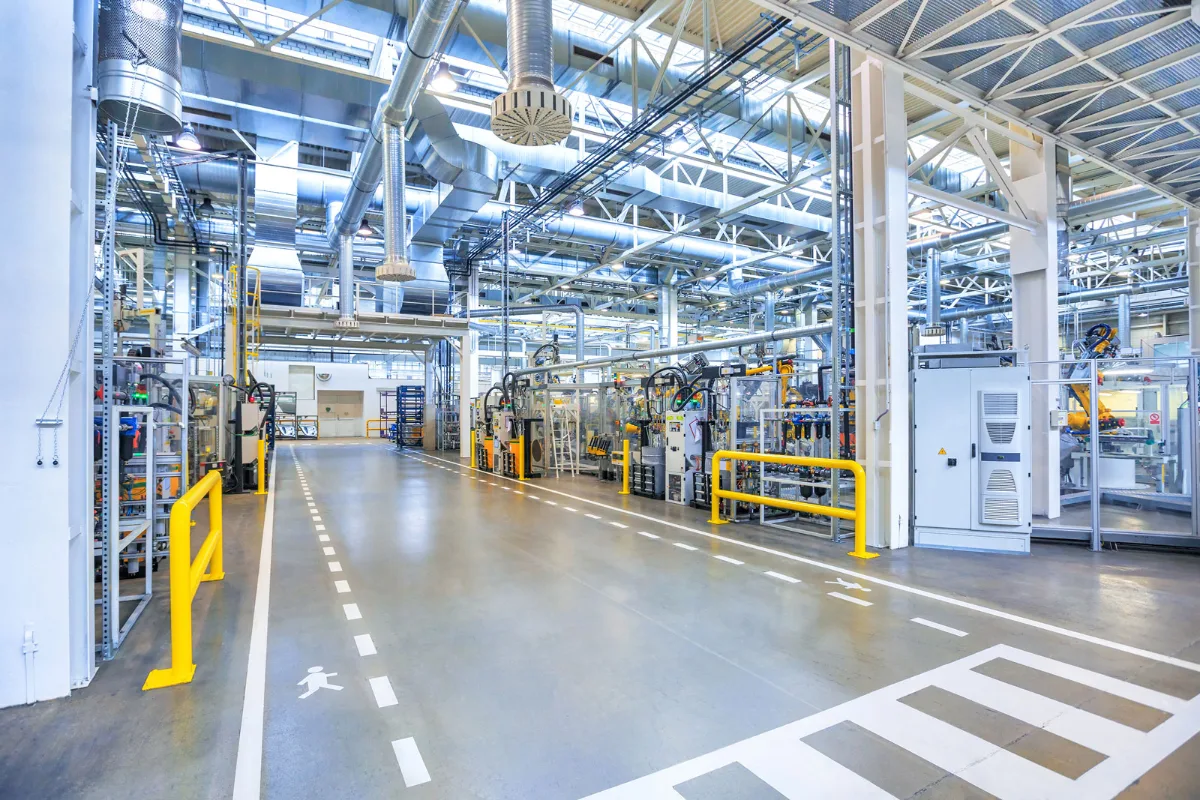 Source: TC Solutions siteProcessing Plants
- Stock slot · TrainsTrains
- Stock slot · Correctional FacilitiesCorrectional Facilities
 Source: TC Solutions siteCasinos
Crawl-In Duct Cleaning Questions
Why do long horizontal kitchen exhaust ducts require crawl-in cleaning?
Long horizontal duct runs contain areas that standard spray equipment cannot reach thoroughly. Grease vapours condense and collect along the bottom of horizontal ducts, around elbows, and in low-velocity zones. Crawl-in cleaning allows technicians to physically access these sections and manually remove accumulated grease from hard-to-reach areas, eliminating hidden fuel loads that pose a fire risk.
What happens during a crawl-in commercial kitchen duct cleaning?
Where the duct system permits safe physical entry, technicians use confined-space safety equipment to enter the ductwork and clean interior surfaces directly. Total Commercial Exhaust uses manual scraping and power washing to address grease buildup throughout difficult horizontal runs and other areas requiring direct access. Every section is cleaned to bare metal.
How do you clean areas of commercial kitchen ductwork that standard spray wands cannot reach?
For appropriate duct systems, crawl-in cleaning provides technicians with direct access to areas that conventional cleaning equipment may not adequately reach. This is particularly useful for long horizontal runs, structural elbows, and complex duct layouts where hidden grease pockets develop over time.
What happens to the duct access doors after crawl-in cleaning?
Total Commercial Exhaust inspects existing duct access openings and cleans the access-door frames. After cleaning, the access doors are reinstalled using UL-listed, fire-rated gaskets to help maintain a grease-tight, airtight seal. This step is critical to preventing exhaust leaks into building cavities.
What types of buildings are most likely to need crawl-in duct cleaning?
Facilities with long or complex commercial kitchen exhaust systems are the primary candidates. Multi-storey buildings, shopping centres, and hotel complexes where ductwork travels horizontally through false ceilings, between building floors, or through service shafts before reaching an exterior wall or roof riser are the most common examples. Contact us for an on-site assessment.
Find Out If Your Ducts Need Crawl-In Service
Long horizontal duct runs demand a cleaning approach that goes beyond standard equipment. Total Commercial Exhaust provides on-site assessments to determine whether your facility requires certified crawl-in service. Reach out to compare your options.
Office hours: Monday through Friday, 7 a.m. to 5 p.m. Emergency services available 24/7.